|
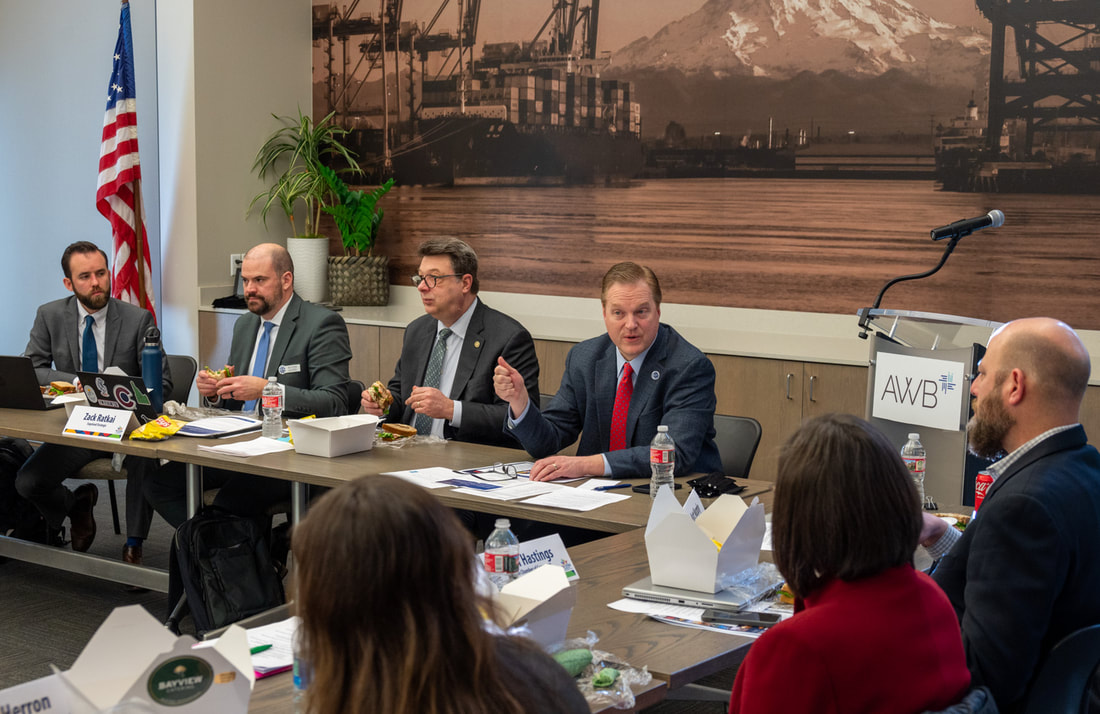
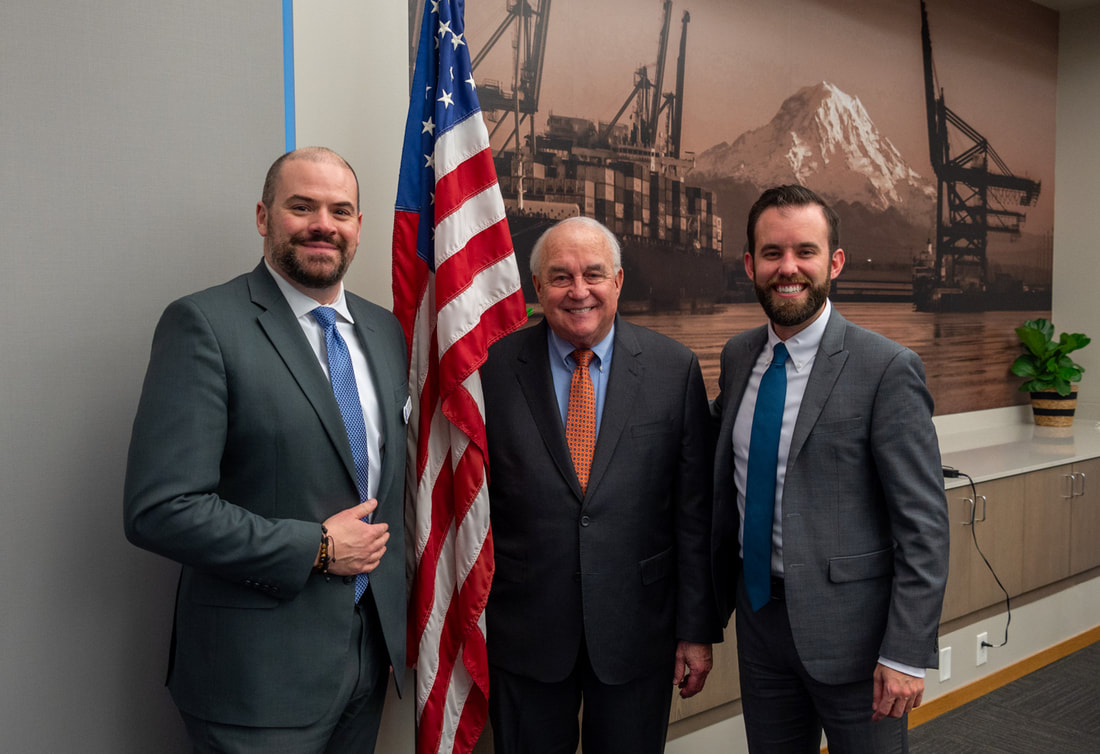
On February 5, the Association of Washington Business (AWB) hosted its annual Legislative Day & Hill Climb in Olympia, bringing together hundreds of employers to engage directly with state lawmakers. For the second time in two weeks representatives for Tri-City businesses gathered to make our voices heard in Olympia.
The day commenced with a welcome session at the AWB office, setting the stage for a series of face-to-face meetings between business leaders and legislators at the Washington State Capitol Campus. These discussions covered critical topics such as transportation, housing, healthcare, workforce development, tax and fiscal policies, energy, environmental concerns, employment law, manufacturing, and data privacy. A highlight of the event was the keynote address delivered by Governor Bob Ferguson during the luncheon at Saint Martin's University's Norman Worthington Conference Center. Governor Ferguson emphasized the importance of responsible budgeting and avoiding revenue assumptions that could lead to future shortfalls. He stated, "I'm determined as governor to make sure we learn from mistakes that we made as a state in making decisions on how we budgeted." Throughout the day, participants had the opportunity to meet with key legislators, including State Representative Greg Nance, D-Bainbridge Island, who engaged with AWB members on transportation issues. The event concluded with a legislative reception at Anthony's Homeport Olympia, providing a platform for further networking and discussions between business leaders and policymakers. Despite a snowy start, the 2025 AWB Legislative Day & Hill Climb was marked by productive dialogues and a shared commitment to addressing the pressing issues facing Washington's business community.
0 Comments
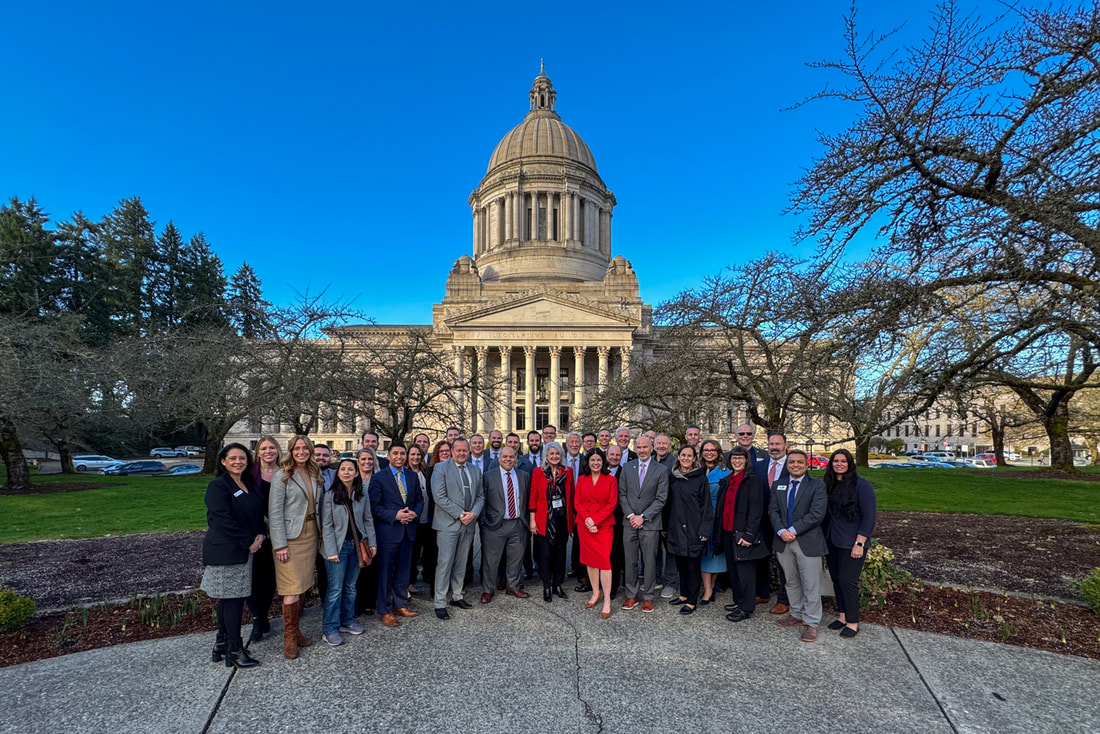
Tri-Cities Delegation Visits Olympia: Key Insights and Advocacy for 2025 Legislative Priorities1/28/2025 Last week, the Tri-Cities Legislative Council, Leadership Tri-Cities, and local businesses brought a group of over 80 citizens to Olympia to meet with our legislative representatives. Our goal was to discuss the 2025 legislative priorities and explore ways to successfully advocate for them.
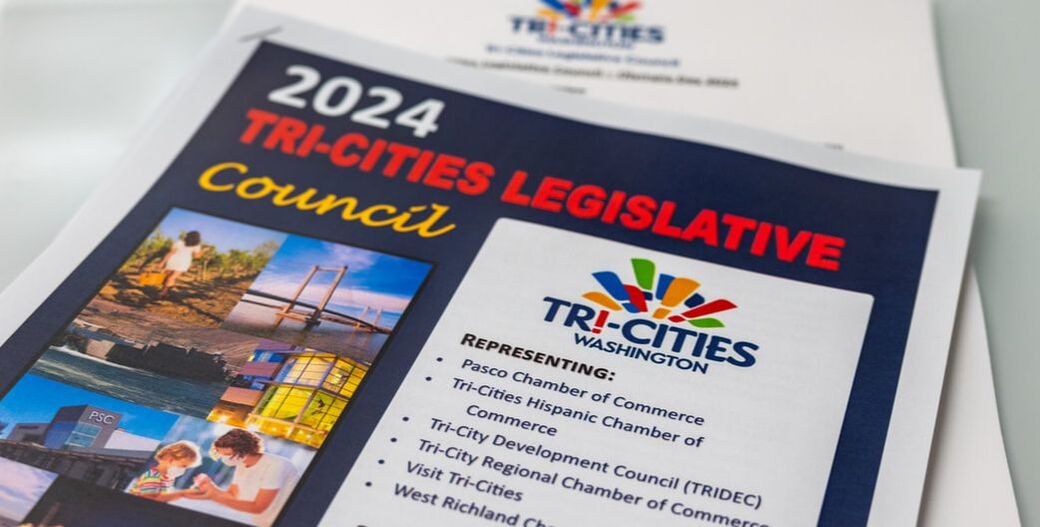
You can review the 2025 Legislative Priorities in our previous blog post. While in Olympia, the Tri-Cities delegation heard from Senators Boehnke, King, and Dozier. They provided valuable insights into the current political climate, emphasizing that despite Governor Ferguson’s positive outlook, the state budget remains tight, making it challenging to secure funding from the legislature. We also had the opportunity to hear from two freshman representatives from the 14th Legislative District: Gloria Mendoza and Deb Manjarrez. They shared their experiences as first-year legislators and expressed enthusiasm for representing the Tri-Cities region. In addition, Representative Connors, the Minority Floor Leader, visited our group. Now, in her second term, she is establishing herself as a strong voice in the legislature, and we are all proud of her accomplishments. Our agenda included a visit from David Puente, Director of the Washington State Department of Veterans Affairs, whose presentation on the Veterans’ Cemetery generated significant interest and discussion. We also had a surprise visit from Joe Nguyen, the new Director of the Washington State Department of Commerce. His presentation was engaging, and we look forward to collaborating with him in the future. The day concluded with a Legislative Reception where we welcomed lawmakers from across the state. The Tri-Cities Legislative Council organizes this trip to Olympia every January. Tri-Cities Legislative Council sets 2025 PrioritiesThe Tri-Cities Legislative Council, comprised of the Pasco Chamber of Commerce, Tri-Cities Hispanic Chamber of Commerce, Tri-City Development Council (TRIDEC), Tri-City Regional Chamber of Commerce, Visit Tri-Cities, and West Richland Chamber of Commerce, recently completed its 2025 Legislative Priorities screening process. These legislative priorities represent inputs solicited from cities, counties, ports, community and not-for-profit organizations, public utilities, businesses, educational institutions, and other members of the community.
In addition to the five priorities outlined below, the Tri-Cities Legislative Council (TCLC) also supports the priorities of the community at large, as we continue working together to enhance regional collaboration for our collective benefit. We support our partners in their priority focuses, including agriculture and conservation, childcare, clean energy and transmission, economic development, education – early learning, K-12 and higher education – hospitality and tourism, housing, law enforcement and public safety, manufacturing and permitting reform, and transportation and infrastructure. Priority #1: Battelle’s Energy Resources Testbed The electricity demand in the Pacific Northwest is expected to grow by 30% over the next decade, requiring Washington State to expand power generation and transmission while transitioning to zero-carbon resources. With constrained transmission infrastructure limiting state-wide economic development, solutions such as energy storage, distributed energy resource management, and improved coordination of regional systems can optimize existing assets. Leveraging local resources, such as rooftop solar, can reduce transmission congestion; however, no unified pathway currently exists for grid-scale coordination. Battelle, operator of the Pacific Northwest National Laboratory (PNNL), proposes a $4 million testbed to enhance the integration of distributed energy resources, leveraging PNNL’s state-supported facilities to ensure grid resilience and resource adequacy during this transition. The Tri-Cities Legislative Council strongly supports $4 million for Battelle to develop a testbed at the Pacific Northwest National Laboratory to advance planning and operation capabilities to utilize distributed energy resources to provide grid services to ensure resource adequacy. Priority #2: HB 1210 – Amending Targeted Urban Area Exemptions for Clean Energy Transformation Businesses The Targeted Urban Areas (TUA) program authorized by the legislature in 2022 provides tax exemptions for qualifying manufacturing businesses that create new jobs. Richland established Washington's first TUA in 2023 with ATI Inc., a material company that serves the aerospace and defense industries. This success has spurred additional TUA projects, including Framatome, a clean energy supply chain manufacturer expanding advanced nuclear fuel production in collaboration with washington-based companies such as Terrapower. However, the current TUA construction timeline of up to five years is insufficient for heavily regulated or complex projects such as nuclear and hydrogen energy development. Extending this timeline aligns with Richland’s strategic plan to advance clean energy innovation in the Northwest Advanced Clean Energy Park. The Tri-Cities Legislative Council strongly supports HB 1210 in amending the Targeted Urban Area (TUA) tax exemption to ensure that complex and highly regulated clean energy projects can access and fully utilize the legislative intent of the original TUA designation. Priority #3: Tri-Cities Regional Transportation Feasibility Study The Tri-Cities region has experienced rapid growth, adding 130,000 residents over the past 25 years, and projecting an additional 145,000 residents and 44,000 households by 2040. With 22,000 more vehicles expected on local roadways in the next two decades, the region’s infrastructure is at risk of being overwhelmed, as the average commute times are already increasing. To address this, local governments aim to proactively plan future road and freight infrastructure needs. The Benton-Franklin Council of Governments proposes a study to prioritize large-scale investments to reduce congestion and improve traffic flow. However, transportation funding processes often prioritize immediate crises, necessitating alternative funding to ensure that Tri-Cities remains ahead of rapid growth. The Tri-Cities Legislative Council strongly supports one-time funding for a feasibility study to identify top priorities for large-scale regional transportation infrastructure investments. Priority #4: The Mid-Columbia Children’s Museum The Mid-Columbia Children's Museum (MCCM) is a grassroots initiative to create a children’s museum serving families in Tri-Cities and the surrounding regions of Southeastern Washington and Northeastern Oregon. Its mission is to provide an inclusive, engaging space that promotes STEAM learning, family interaction, and the development of lifelong learners. Since early 2023, the MCCM Founding Task Force has collaborated with the community to plan a museum that reflects local industries and offers hands-on career exploration opportunities. A privately funded feasibility study set for completion in early 2025 will guide decisions on the museum’s size, location, and operational plans. Following this, the project will move into the pre-concept and schematic design phases, which will solidify the vision for the museum and enable a building capital campaign, expediting the timeline to bring this valuable resource to the community. The Tri-Cities Legislative Council supports $1.3 million for pre-concept and schematic design for the Mid-Columbia Children’s Museum. Priority #5: Establishing a Tri-Cities Veterans Cemetery Establishing a veteran cemetery in Tri-Cities is essential to providing a dignified final resting place for 46,000 veterans within a 75-mile radius, as identified by a 2017 feasibility study and the U.S. Department of Veterans Affairs, Currently, veterans in Southeastern Washington must choose between private or civilian cemeteries or travel to veteran cemeteries in Medical Lake or Kent. A Tri-Cities veterans cemetery, estimated to support 400 interments annually, would address this gap. Initial state funding would qualify the project for federal VA funding, covering up to 100% of the construction and ongoing operational costs. While the Governor’s proposed 2025-2027 budget includes $500,000 for pre-design work, it omits funding for property procurement, which is critical to moving the project forward. This cemetery honors veterans’ sacrifices and improves their families’ quality of life by addressing a pressing regional and statewide need. The Tri-Cities Legislative Council strongly supports robust funding – including for pre-design work and property procurement – for the Washington State Department of Veterans Affairs and its State Veteran Cemetery Program to continue its pursuit of a future Tri-Cities Veterans Cemetery. You can view the complete Tri-Cities Legislative Council 2025 Legislative Priorities HERE Rep. Stephanie Barnard prefiles MATCHED Act to boost economic growthRep. Stephanie Barnard, R-Pasco, has prefiled the MATCHED Act (Moving Assets to Create Healthy Economic Development) for the 2025 legislative session. House Bill 1057 aims to stimulate economic growth by helping local communities access federal funding more effectively.
Barnard's proposal tackles the difficulties many communities face in securing federal funds, particularly in rural and distressed areas. A lack of state matching dollars, often required to access federal resources, is a common obstacle. The bill seeks to eliminate these barriers by providing state matching funds, enabling communities to leverage federal and private investments more effectively. "With the statewide budget shortfall, many legislators are considering tax increases," Barnard said. "But more taxes aren't the solution. Instead, Washington should take full advantage of federal funding opportunities to tackle the budget crisis and grow our economy. The MATCHED Act helps pave the way for Washingtonians to succeed." In addition to offering state matching funds, the MATCHED Act focuses on expanding grant-writing support to improve access to federal assistance. The bill directs the Department of Commerce to establish a grant program by July 1, 2025. This program would help local governments, economic development organizations, and rural counties to hire grant writers. "Washington is leaving significant federal dollars on the table," Barnard added. "By prioritizing support for distressed areas, we can secure funding for critical projects like broadband expansion, housing, infrastructure, and workforce training. These investments will directly benefit our communities." The bill also requires the Department of Commerce to maintain a comprehensive database of federal grant opportunities, provide clear application guidelines and scoring criteria, and foster partnerships to improve grant-seeking success. "This is about smart, strategic investments," Barnard said. "By helping local communities tap into federal funds, we're turning missed opportunities into real solutions for our state and empowering communities to succeed." The 2025 legislative session begins on Jan. 13 and is scheduled to run for 105 days. The Tri-Cities Legislative Council (TCLC) is a coalition of community organizations from the Tri-Cities. Its primary mission is to advocate for the region's interests at the state and federal levels, fostering collaboration among member organizations to avoid duplication of efforts and maximize impact.
Member Organizations The TCLC comprises representatives from the following organizations: • Tri-City Industrial Development Council (TRIDEC) • Visit Tri-Cities • Tri-City Regional Chamber of Commerce • Pasco Chamber of Commerce • West Richland Chamber of Commerce • Tri-Cities Hispanic Chamber of Commerce Mission and Focus The TCLC works collectively to identify and prioritize legislative issues that affect the Tri-Cities area. Key areas of focus include: • Infrastructure development • Economic growth • Education • Energy • Environmental sustainability By addressing these priorities, the council seeks to promote policies and secure resources that align with the region’s long-term goals. Core Functions 1. Legislative Advocacy: The TCLC identifies and champions key legislative priorities that directly impact the Tri-Cities region, such as transportation, education, economic development, energy policy, and water resources. 2. Unified Representation: Acting as a cohesive voice, the council represents the collective interests of the region, ensuring consistent and effective advocacy on issues that transcend individual cities or counties. 3. Engagement with Lawmakers: The council facilitates direct communication and meetings between regional leaders and state or federal legislators to discuss pressing needs and propose practical solutions. 4. Community Advocacy: The TCLC ensures that the diverse interests of businesses, residents, and other stakeholders are included in legislative discussions, fostering inclusive representation. Impact and Benefits The TCLC's unified approach amplifies the region’s influence in securing funding, shaping policy, and driving innovation. By working collaboratively, the council strengthens the Tri-Cities’ position as a thriving and forward-looking community. On December 3, 2024, the U.S. The District Court for the Eastern District of Texas issued a nationwide preliminary injunction that halted enforcement of the Corporate Transparency Act (CTA). This act, which was passed in 2021, mandates that certain U.S. companies disclose their beneficial owners to the Financial Crimes Enforcement Network (FinCEN). The primary goal of CTA is to prevent financial crimes, such as money laundering and tax evasion, by increasing transparency in corporate ownership. The court found the CTA "likely unconstitutional," citing concerns about federal overreach into areas traditionally governed by state law, particularly those related to corporate formation and governance. As a result, the injunction suspends the CTA's reporting requirements across the nation, effectively postponing the January 1, 2025, deadline for companies to provide beneficial ownership information. This ruling aligns with a similar decision made by a federal court in Alabama earlier this year. The U.S. The Department of Justice has chosen not to comment on Texas’s ruling, and the case is expected to advance through higher courts, potentially reaching the Supreme Court. Impact on Businesses This situation creates uncertainty for businesses preparing to comply with the CTA's reporting requirements. While the injunction is in place, companies are not required to submit beneficial ownership information to the FinCEN. However, businesses should remain informed about potential appeals and future legal actions, as the legal environment related to CTA may continue to evolve. What the Corporate Transparency Act Requires The Corporate Transparency Act requires certain U.S. companies to report beneficial ownership information to FinCEN. Beneficial owners are individuals who own or control at least 25% of the company, or exercise significant control over it. The information that must be reported includes the following. • Full legal name • Date of birth • Current residential or business address • A unique identifying number from an acceptable identification document (such as a passport or driver's license) The purpose of these requirements is to create a centralized database that law enforcement and regulatory agencies can use to detect and prevent illegal activities facilitated by anonymous corporate structures. The recent court ruling on the Corporate Transparency Act has significant implications for business. While the injunction provides temporary relief from CTA's reporting requirements, it also introduces uncertainty. Businesses should remain vigilant and remain updated on any legal developments related to CTA to ensure compliance with future regulations. Understanding CTA and its potential impact is crucial for businesses to effectively navigate an evolving regulatory landscape. Transportation Benefit DistrictsTransportation Benefit Districts (TBDs) are an important mechanism for local governments in Washington State to fund and maintain transportation-related projects. These districts provide cities and counties with a way to address infrastructure needs without relying solely on state and federal funding.
A Transportation Benefit District (TBD) is a quasi-municipal corporation authorized by Washington State law, specifically under RCW 36.73. Local governments can establish TBDs to generate revenue dedicated to funding transportation improvements. These improvements include a wide range of projects aimed at maintaining and enhancing local transportation infrastructure. A TBD can encompass a whole city, a portion of a city, or even multiple jurisdictions if neighboring municipalities choose to collaborate. This flexibility allows local governments to create a funding mechanism tailored to their specific needs and challenges, from urban centers to rural areas. Once a TBD is established, the local government can use several tools to generate revenue specifically for transportation projects. Common revenue-generating mechanisms include:
Funds collected through TBDs are restricted to transportation-related projects. These projects can vary widely but must fall within the scope of transportation improvements as defined by Washington State law. Some common uses of TBD funds include:
Transportation Benefit Districts are critical to local governments in Washington State for several reasons. They allow cities and counties greater autonomy in identifying transportation needs. They also create a dedicated and flexible funding stream for funding transportation improvements, helping to bridge the gap between other sources of funding. Well-maintained transportation infrastructure is essential for economic development and because TBD funds are restricted to transportation projects, they increase accountability in local government spending. Transportation Benefit Districts are a vital funding mechanism for Washington's cities and counties, providing them with the flexibility and resources to address diverse transportation challenges. With dedicated funds for transportation projects, TBDs ensure that local governments can keep roads, bridges, and transit systems safe, efficient, and up to date. In a state where population growth and economic development are putting pressure on infrastructure, TBDs are an essential part of the solution. They empower communities to plan and fund transportation improvements that directly impact residents' daily lives, making TBDs a cornerstone of local government finance and planning in Washington State. Currently the City of Richland has a Transportation Benefit District. The City of Kennewick just approved one. The City of Pasco is considering one to help tackle it's protentional budget shortfall. West Richland does not currently have a TBD. In today’s diverse and inclusive business environment, making accommodations for employees and customers with disabilities is not only a moral and legal obligation but also a smart financial decision. Businesses that implement structural modifications or other accommodations can benefit from various tax incentives designed to offset the costs of these improvements. Below, we will explore the key tax incentives available to employers who make their workplaces more accessible, including the Disabled Access Credit and the Barrier Removal Tax Deduction.
Here are some tax incentives available for employers who make accommodations for individuals with disabilities. Disabled Access Credit The Disabled Access Credit is a non-refundable credit available to small businesses that incur expenses to enhance accessibility for individuals with disabilities. An eligible small business is defined as one that generated $1 million or less in revenue or employed no more than thirty full-time employees in the previous taxable year. The business may claim the credit annually as they incur access expenditures. They obtain the credit by filling out Form 8826, Disabled Access Credit, and submitting it with their federal tax return. Barrier Removal Tax Deduction The Architectural Barrier Removal tax deduction promotes businesses of all sizes to eliminate architectural and transportation barriers that impede the mobility of individuals with disabilities and the elderly. Businesses may claim a deduction of up to $15,000 annually for qualified expenses on items that typically need to be capitalized. To claim this deduction, businesses must list it as a separate expense on their income tax return. Additionally, businesses may utilize the Disabled Tax Credit and the architectural/transportation tax deduction concurrently in the same tax year, provided the expenses satisfy the requirements of both categories. To utilize both, the deduction is equivalent to the difference between the total expenses and the amount of the claimed credit. For more information on both these tax incentives visit the IRS Tax Tip page. By taking advantage of the Disabled Access Credit and the Barrier Removal Tax Deduction, businesses can significantly reduce the financial burden of making their facilities accessible to individuals with disabilities. These tax incentives not only promote inclusivity and compliance with legal standards but also enhance the overall customer and employee experience. Investing in accessibility is a win-win situation, fostering a more inclusive society while providing tangible financial benefits to businesses. Make sure to consult with a tax professional to maximize these opportunities and ensure all eligibility requirements are met. Sign Up for the Chamber Checkpoint Advocacy Newsletter Stay engaged with local politics, keep an eye on legislative sessions, and consider participating in conversations about policies that affect your business. In the Washington State Legislature, a supermajority is achieved when one political party holds more than two-thirds of the seats in either the House of Representatives or the Senate. This level of control can have significant implications for the legislative process and policymaking in the state. Having a supermajority in the legislature can lead to substantial policy changes, both positive and negative, depending on which party holds the power.
To achieve a supermajority in Washington, a party would need to control both chambers. The Senate has 49 seats, and a supermajority in the Senate would require at least 34 members (69%). The House has 98 seats, and a supermajority in the House would require at least 66 members (67%). What Does a Supermajority Mean? With a supermajority, a party can pass bills without needing to rely on the opposition. This allows them to push through their legislative agenda with minimal compromise. A supermajority can implement significant tax increases or reforms. For example, they could pass a statewide carbon tax or changes to the Business & Occupation (B&O) tax rate that directly impact businesses. With control, a party could push through more aggressive environmental policies, such as stricter emission standards or expanded cap-and-trade programs. For businesses, these could lead to higher compliance costs or new operational requirements. The legislature controls the state’s budget. A supermajority could direct more funding to public services, education, infrastructure, or social programs. Decisions about how to allocate state revenues may lead to tax hikes or changes to how businesses are taxed. For example, they could implement new taxes on certain sectors (like tech or construction) to fund state programs. One of the most significant powers of a supermajority is that it can place amendments to the state constitution on the ballot. This could have long-lasting implications for business regulations, land use, or even taxation policies. What Are the Implications of a Supermajority for Business Owners? A supermajority party will have the power to enact sweeping policy changes that could either benefit or hurt businesses. Business owners need to stay informed and adaptable. A supermajority could pass laws imposing stricter regulations on industries, such as tech privacy laws or labor regulations like paid family leave. Businesses might face new taxes or higher rates on income, capital gains, or environmental fees. A supermajority could also push for stronger union protections, increasing costs for employers. How Should Business Owners Prepare for a Supermajority? Understanding the political landscape and each party’s platform can help you anticipate upcoming changes. Get involved in the legislative process through industry associations or direct communication. Sharing the potential impact on your business can influence policy decisions. Whether preparing for tax increases or new regulations, being proactive in adjusting business strategies can help mitigate negative impacts. Current election results still have the democrats a few seats short in both the House and the Senate. A supermajority gives a political party in Washington state significant power to shape policies, especially in areas like taxation, regulation, and budgeting. Business owners should stay alert to potential shifts and prepare for a range of outcomes, both positive and negative. Sign Up for the Chamber Checkpoint Advocacy Newsletter Stay engaged with local politics, keep an eye on legislative sessions, and consider participating in conversations about policies that affect your business. Understanding Washington State’s Minimum Wage Law: Past Trends, Business Impacts, and Future Changes10/30/2024 Washington state has long been at the forefront of minimum wage legislation in the United States. Known for its progressive policies, the state has consistently adjusted its minimum wage to reflect economic conditions and the cost of living. This blog post will explore the history of Washington’s minimum wage law, its effects on businesses, and the upcoming changes in 2025.
Washington's minimum wage law is governed by the Washington Minimum Wage Act (MWA), which was first enacted in 1961. Over the years, the state has made several significant adjustments to ensure that wages keep pace with inflation and the cost of living. One of the most notable changes occurred in 1998 when voters approved Initiative 688, which tied the minimum wage to the Consumer Price Index (CPI). This initiative ensured that the minimum wage would increase annually based on inflation. In recent years, Washington has consistently had one of the highest minimum wages in the country. For instance, in 2024, the state minimum wage was $16.28 per hour. Cities like Seattle, SeaTac, and Tukwila have even higher local minimum wages, reflecting the higher cost of living in these areas. The impact of minimum wage increases on businesses has been a topic of much debate. On one hand, higher wages can lead to increased consumer spending, as workers have more disposable income. This can be beneficial for local economies and businesses that rely on consumer spending. However, there are also challenges. Small businesses often struggle with the increased labor costs. Studies have shown that while some businesses can absorb these costs, others may need to reduce their workforce, cut hours, or increase prices to maintain profitability (2). For example, a study from the University of Washington found that the $15 minimum wage in Seattle led to a reduction in hours worked for low-wage employees, although their overall earnings increased. Starting January 1, 2025, Washington’s minimum wage will increase to $16.66 per hour, a 2.35% increase from 2024 (3). This adjustment is based on the CPI, ensuring that wages keep pace with inflation. Additionally, several cities will have even higher minimum wages. For instance, Seattle’s minimum wage will rise to $20.76 per hour, and Tukwila’s will reach $21.10 per hour for large employers. These changes will also affect the salary thresholds for exempt employees. For small employers (up to fifty employees), the minimum annual salary will be $69,305.60, while for large employers (more than fifty employees), it will be $77,968.80. These adjustments ensure that salaried employees are fairly compensated and not overworked without proper overtime pay. Washington State’s approach to minimum wage reflects its commitment to ensuring fair wages for its workers. While the increases present challenges for some businesses, they also offer benefits such as increased consumer spending and reduced employee turnover. As we move into 2025, it will be crucial for businesses to adapt to these changes and for policymakers to continue monitoring the impacts to ensure a balanced approach that supports both workers and businesses. |
Categories
All
Archives
December 2025
|
RSS Feed